Take over insurer communications
We manage statements, document requests, and settlement discussions so you do not say something that gets used to minimize your injuries.
Serving Dallas, Texas & surrounding areas
Mon–Fri 8am–6pm Sat 9am–2pm
If you were hurt in a crash, you need a clear plan fast. We handle insurance communications, document injuries, and pursue full compensation while you focus on treatment and getting back to work.
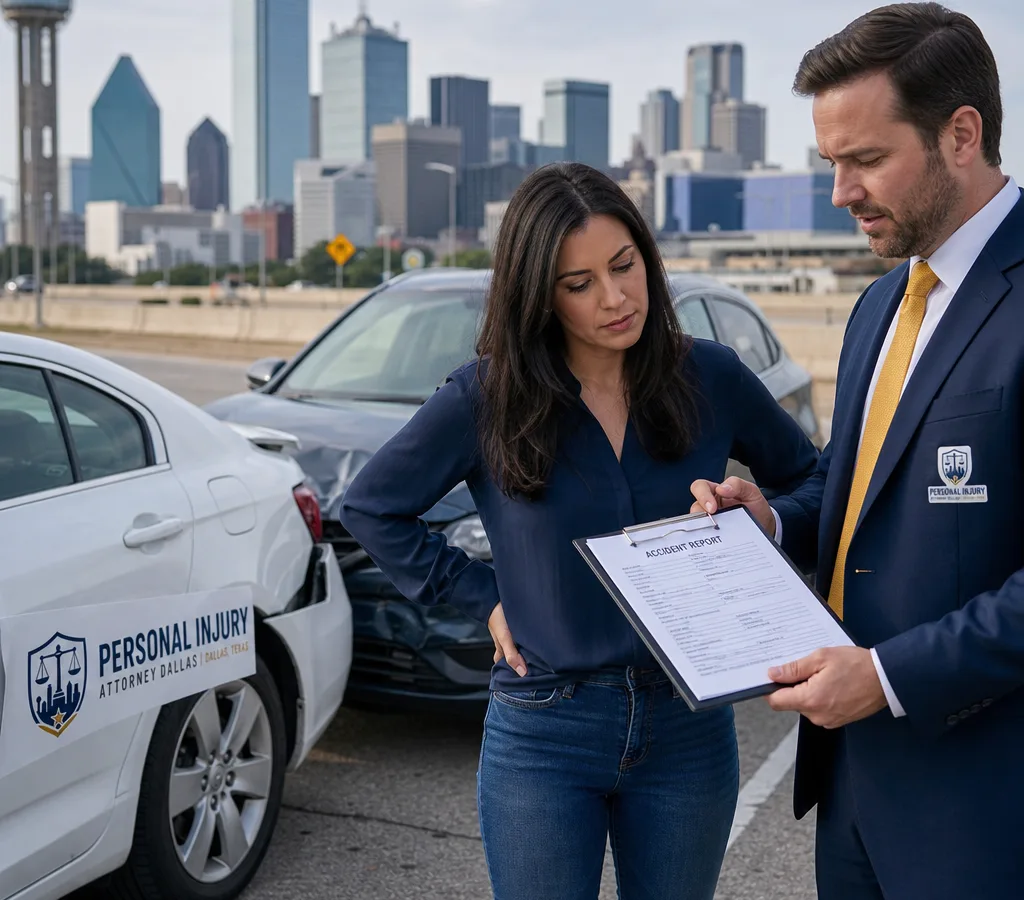
After a collision, medical bills can arrive while your vehicle is still in the shop and an adjuster is already seeking a recorded statement or quick settlement. Legal help can protect the value of your claim while you recover.
Personal Injury Attorney Dallas represents injured drivers, passengers, and pedestrians across Dallas, Texas. We preserve crash evidence, document medical treatment and wage loss, and manage insurer communications before important proof disappears.
Crashes on I-35E, US-75, and I-635 can involve chain reactions and difficult fault disputes. The immediate next step is to review the collision, identify available coverage, and secure time-sensitive evidence.
Focused case work turns a stressful collision into a documented claim with clear next steps.
We manage statements, document requests, and settlement discussions so you do not say something that gets used to minimize your injuries.
We gather crash reports, photos, witness accounts, and available video to show what happened and why the other driver is responsible.
We organize records and billing, track future care needs, and connect the timeline between the crash and your symptoms.
Damages can include medical costs, lost income, reduced earning ability, out-of-pocket expenses, and pain and suffering supported by the records.
If the insurer will not offer a fair amount, we prepare the case to be filed and pursued through the Dallas County court system.
Deadlines matter. We track limitations periods, coordinate medical updates, and push for resolution without rushing your recovery.
A solid claim is more than a story. It is a file that proves liability and damages in a way an insurance company cannot ignore.
Liability: We start with the Texas Peace Officer's Crash Report (CR-3) when available, then look for vehicle damage patterns, intersection timing, witness accounts, and relevant video. Nearby camera footage can be decisive, but it must be requested quickly.
Damages: Your medical chart is the backbone of the claim. We document follow-up care, imaging, physical therapy, specialist visits, wage loss, and out-of-pocket expenses.
Dallas-specific realities: Stop-and-go traffic increases rear-end and multi-vehicle impacts, while highway speeds raise the risk of serious injury. Rideshare, commercial vehicle, and uninsured-driver crashes may add extra layers of coverage.
The first consultation lets us review the facts, identify coverage, and outline the evidence needed next.
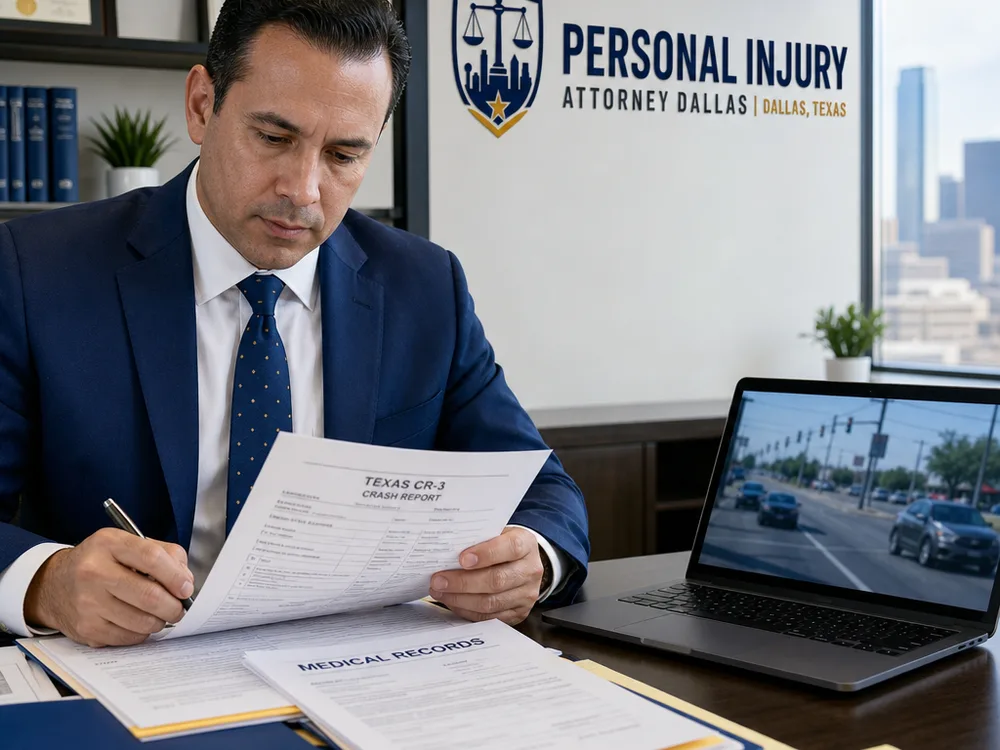
A documented, sequential process keeps the claim moving without rushing your medical recovery.
We discuss how the crash happened, your symptoms, and your treatment plan. Then we identify time-sensitive evidence and available coverage.
We request the crash report, contact witnesses as appropriate, collect photos and vehicle damage documentation, and open the injury claim with relevant insurers.
As treatment continues, we organize medical records and bills, confirm wage loss documentation, and track crash-related expenses.
Once your injuries and prognosis are clear enough to value the claim, we prepare a demand package and negotiate for an appropriate settlement.
If needed, we file suit and pursue the case through discovery and court deadlines, keeping you informed before each major decision.
The right attorney can prove your case and explain the process in plain English. Ask who will handle your file day to day, how often you will receive updates, and which evidence is most important for liability.
You should also understand how the firm evaluates damages while treatment is ongoing, responds to pre-existing-condition arguments, and approaches litigation if negotiations stall.
A rear-end collision in Uptown may involve a sudden-stop defense. A late-night Deep Ellum crash can raise visibility and lane-position disputes. In Lake Highlands or Oak Cliff, witness accounts and intersection layout may matter more than speed data.
Some claims resolve through negotiation; others require filing suit before a carrier takes the injuries seriously. Either way, you should understand the plan before committing.
A useful consultation should identify the evidence to preserve, coverage to investigate, and decisions likely to shape the claim.
If you were hurt in a Dallas auto wreck, get a consultation while evidence is still available and before you accept any settlement paperwork.
Call for a Free ConsultationReach out once your immediate medical needs are addressed because video, witness memories, and vehicle condition can change quickly. Early help can also prevent problems with recorded statements, blanket medical authorizations, and premature offers.
Texas uses modified comparative fault. Recovery can be reduced by your percentage of fault, and generally is unavailable if you are more than 50% responsible. Crash reports, scene evidence, and consistent medical documentation can affect how fault is allocated.
You are not required to give the other driver's insurer a recorded statement. Doing so can create problems while you are still learning the full extent of your injuries. An attorney can handle communications and provide necessary information in a controlled way.
A claim can include medical expenses, supported future care, lost wages, reduced earning capacity, property-related losses, and pain and suffering. Value depends on liability proof, treatment consistency, and how clearly the records connect the crash to the injuries.
If you carry uninsured or underinsured motorist coverage, it may apply when the at-fault driver has no insurance or insufficient coverage. An attorney can review the policies and handle the UM/UIM claim documentation.
Some claims resolve in a few months. Cases involving significant treatment, surgery, or disputed liability can take longer and may require filing suit in Dallas County. Timing depends on medical recovery, documentation, and the insurer's response.
Share what happened and where you are in treatment. We will explain the claim process, what evidence we want to preserve, and what a fair outcome can include before you sign anything.