Proof that holds up
We focus on records that move the case: ELD and hours-of-service logs, driver qualification and training files, maintenance and inspection records, dispatch instructions, and crash scene documentation.
Serving Dallas, Texas & surrounding areas
Mon–Fri 8am–6pm Sat 9am–2pm
If you were hit by a commercial truck, the next few days matter. Get practical legal guidance on medical bills, evidence preservation, and a claim strategy built for high-stakes trucking cases.
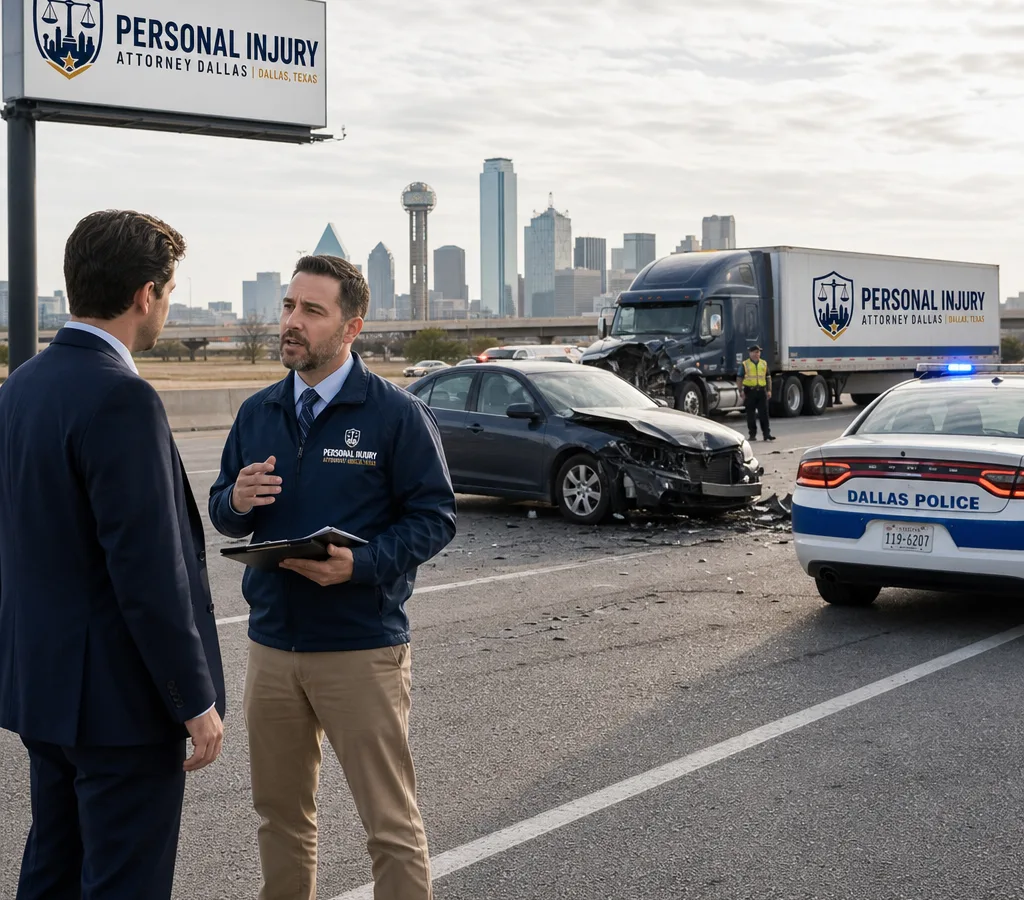
A crash with an 18-wheeler is not handled like a typical car wreck. A truck accident attorney Dallas clients hire needs to move fast, preserve evidence that can disappear within days, and understand how trucking companies and their insurers defend these cases.
With commercial trucks, liability can involve several parties at once: the truck driver, the motor carrier, a maintenance contractor, a shipper or broker, and sometimes a manufacturer. Proving what happened often comes down to records you do not have access to on your own, such as electronic logging device (ELD) data, driver qualification files, dispatch communications, maintenance and inspection records, and the truck's event data recorder.
Personal Injury Attorney Dallas focuses on injury claims arising from truck and semi crashes in Dallas, TX 75201. Our job is to take pressure off you while we protect the claim, build the evidence file, and push for full compensation through negotiation or litigation when needed.
In serious truck collisions, the first week often shapes the whole case. If you can, keep these priorities in mind:
1) Get medical care and follow-up. Gaps in care are used to argue you were not badly hurt. If symptoms change, document them and tell your provider.
2) Preserve what you control. Save photos, videos, dashcam files, the damaged vehicle if possible, towing and storage paperwork, and any communication from insurers.
3) Limit recorded statements. Trucking insurers may ask for a recorded statement quickly. You are allowed to get advice before you answer questions that can be taken out of context.
4) Trigger evidence preservation. A Dallas semi truck crash attorney will typically send a preservation notice to the carrier and any other involved entities to help prevent loss of critical records like ELD logs, driver time records, GPS/telematics, and maintenance history.
Because Dallas truck routes run through high-traffic corridors and merges, we often see disputes over lane changes, following distance, blind spots, and braking distance. Early investigation helps lock down objective proof before stories shift.
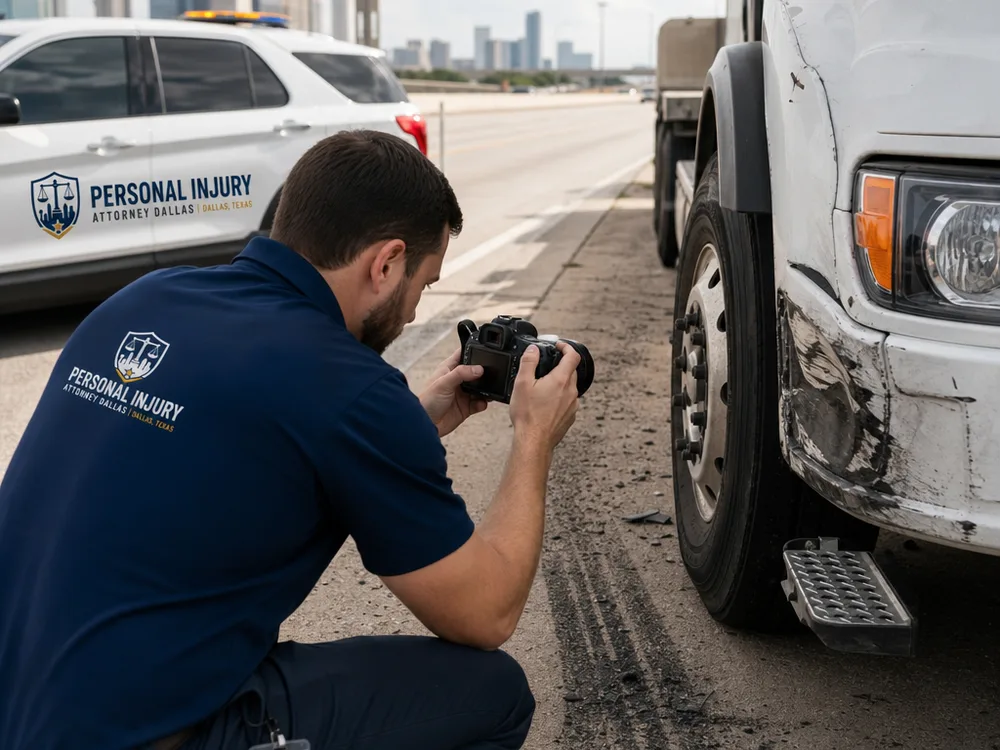
We focus on records that move the case: ELD and hours-of-service logs, driver qualification and training files, maintenance and inspection records, dispatch instructions, and crash scene documentation.
Truck cases often involve layered responsibility. We work to identify every responsible party so the claim reflects the full picture, not only the driver in the cab.
A Dallas truck accident injury attorney should tie the medical story to the legal story. We organize medical records, bills, lost income documentation, and future care needs in a way insurers and juries understand.
Commercial carriers defend aggressively. We prepare cases as if they will be litigated, which supports stronger negotiation and avoids last-minute scrambling.
You get a practical plan: what to do now, what to avoid, and what timelines typically look like for investigation, treatment, and claim resolution.
Dallas truck accident claims often move through local court systems, and the early paperwork and deadlines matter. Many civil injury lawsuits for incidents in Dallas are filed in Dallas County courts at the George L. Allen, Sr. Courts Building. If the case stays in state court, Texas procedural rules govern the timeline for discovery, depositions, and expert work.
Crash investigation and reporting commonly starts with law enforcement response and the Texas Peace Officer's Crash Report (CR-3). Those reports can help identify involved vehicles, insurance carriers, and witnesses, but they are not the final word on fault. Independent evidence often matters more than the narrative summary.
Practical Dallas realities also affect these cases. Downtown and Uptown traffic density can mean more witnesses and cameras but also faster scene clearance. In areas with heavy commuter flow like North Dallas and along major interchanges, the dispute often turns on lane position, merge timing, and how quickly traffic slowed. A focused investigation aims to capture time-sensitive video sources, preserve vehicle data, and lock down the timeline before it gets overwritten.
A clear process protects evidence, documents your injuries, and keeps you informed before each major decision.
We listen to what happened, review what you have (photos, report info, insurer letters), and flag time-sensitive items like vehicle storage, dashcam footage, and potential surveillance video.
We send preservation notices, request and track key records, and evaluate the scene evidence. When appropriate, we coordinate specialized analysis for commercial truck data and reconstruction.
Once your treatment path is clearer, we package liability proof and damages in a demand that accounts for medical bills, lost income, pain and suffering, and future needs where supported.
We negotiate with the carrier and defense counsel. If a fair outcome is not offered, we discuss filing suit and the litigation timeline so you can make an informed decision.
We walk through settlement terms, lien issues when they apply, and what to expect at disbursement so there are no surprises at the finish.
If you are unsure whether you have a truck case or who the responsible parties are, a focused review now can prevent evidence loss and set expectations for medical documentation and claim value.
Call for a Free ConsultationAs soon as you are safe and have medical care lined up, because key trucking evidence (like ELD data, dispatch records, and some camera footage) can be overwritten or lost with time. Early legal guidance also helps you avoid common pitfalls such as recorded statements that lock you into incomplete facts before you understand your injuries.
The most important items are usually objective records: the police crash report identifiers, photos or video from the scene, witness contact information, vehicle damage documentation, and trucking company records such as ELD logs, driver qualification files, maintenance and inspection records, and dispatch communications. In higher-impact cases, truck data and reconstruction analysis can clarify speed, braking, and lane position.
Depending on the facts, responsibility can extend to the motor carrier (trucking company), an employer, a maintenance or repair provider, a shipper or broker involved in loading or dispatch, or a manufacturer if a defect contributed. A Dallas truck accident injury attorney investigates all potential parties so the claim does not leave coverage or liability on the table.
You are not required to provide a recorded statement to the other side's insurer, and it is usually better to get legal advice first. These statements can be used to argue you admitted fault, minimize symptoms, or contradict later medical findings when injuries evolve over time.
It depends on the severity of injuries, how clear liability is, and how long medical treatment takes to stabilize. Some claims can resolve in months when injuries and liability are straightforward, while serious injury cases may take longer, especially if litigation is needed in Dallas County courts to obtain records, take depositions, and work with experts.
You may still have a claim, but the details matter. Texas uses a modified comparative fault rule, which can reduce recovery if you share responsibility and can bar recovery if your share is over the legal threshold. A careful investigation can prevent unfair blame shifting that is common in commercial trucking defenses.
Bring any photos or videos, the crash report information you have, medical visit summaries or discharge papers, insurance correspondence, and information about your missed work. If you have towing and storage paperwork or dashcam files, those can be especially helpful early because they support the timeline and preserve details before memories fade.
Tell us what happened and where you are in treatment. We will explain the next steps, what evidence to preserve, and how a truck accident claim typically unfolds in Dallas.